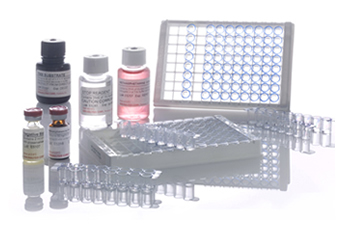
Login to find custom information.
Login to find custom information.
Cat No. NB1738
Size: 96T
Range: Qualitative
Sensitivity: Qualitative
Storage and Expiration: Store at 2-8 °C for 6 months.
Application: For qualitative detection of YFV-IgG in Human serum, plasma, cell culture supernatant or any biological fluid.
Introduction
Yellow fever, known historically as yellow jack, yellow plague, or bronze john, is an acute viral disease. In most cases, symptoms include fever, chills, loss of appetite, nausea, muscle pains particularly in the back, and headaches. Symptoms typically improve within five days. In some people within a day of improving, the fever comes back, abdominal pain occurs, and liver damage begins causing yellow skin. If this occurs, the risk of bleeding and kidney problems is also increased. The disease is caused by the yellow fever virus and is spread by the bite of an infected female mosquito. It infects only humans, other primates, and several species of mosquitoes. In cities, it is spread primarily by mosquitoes of the Aedes aegypti species. The virus is an RNA virus of the genus Flavivirus. The disease may be difficult to tell apart from other illnesses, especially in the early stages. To confirm a suspected case, blood sample testing with polymerase chain reaction is required.
Principle of the Assay
A 96 well plate has been pre-coated with an antigen specific to YFV-IgG. Controls or test samples are added to the appropriate wells and incubated. Free components are washed away with wash buffer. HRP conjugated detection reagent is added to the wells. TMB substrate is used to visualize HRP enzymatic reaction. TMB is catalyzed by HRP to produce a blue color product that changes into yellow after adding acidic stop solution. The density of yellow is proportional to the YFV-IgG amount of sample captured in plate. The O.D. absorbance is measured spectrophoto-metrically at 450nm in a microplate reader, and then the concentration of YFV-IgG can be calculated.
Kit components
1. One 96-well plate pre-coated
2. Positive Control: 0.5 ml
3. Negative Control: 0.5 ml
4. Wash buffer (30×): 20 ml. Dilution: 1:30
5. Sample diluent buffer: 6 ml
6. HRP Conjugate Reagent (RTU): 6ml
7. Stop solution: 6 ml
8. TMB substrate A: 6ml
9. TMB substrate B: 6ml
10. Plate sealer: 2
11. Hermetic bag: 1
Material Required But Not Provided
1. 37 °C incubator
2. Microplate reader (wavelength: 450nm)
3. Precise pipette and disposable pipette tips
4. Automated plate washer
5. ELISA shaker
6. 1.5ml tubes
7. Plate cover
8. Absorbent filter papers
9. 100 ml and 1 L volume graduated cylinder.
Protocol
A. Preparation of sample and reagents
1. Sample
Isolate the test samples soon after collecting and analyze immediately (within 2 hours). Or aliquot and store at -20 °C for long term. Avoid multiple freeze-thaw cycles.
Cell culture supernatant: Centrifuge at approximately 2000-3000 × rpm for 20 min to remove precipitant, analyze immediately or aliquot and store at -20 °C.
Serum: Coagulate the serum at room temperature (about 4 hours). Centrifuge at approximately 2000-3000 × rpm for 20 min. Analyze the serum immediately or aliquot and store at -20 °C.
Plasma: Collect plasma with citrate or EDTA as the anticoagulant. Centrifuge at 2000-3000 × rpm for 20 min within 30 min of collection. Analyze immediately or aliquot and store frozen at -20 °C.
Urine: Collect in a sterile container, centrifuge at 2000-3000 × rpm for 20 min. Analyze immediately or aliquot and store frozen at -20 °C.
Tissues: The preparation of tissue homogenates will vary depending upon tissue type. Collect and Rinse samples at 2-4 °C with PBS (Ph 7.4). Weigh the samples and homogenize with PBS (Ph 7.4), and sonicate the cell suspension. Centrifuge at 2000-3000 × rpm for 20 min. Assay immediately or aliquot and store at -80 °C.
Note: 1. Coagulate blood samples completely, centrifuge, and avoid hemolysis and precipitant.
2. NaN3 cannot be used as test sample preservative, since it inhibits HRP.
2. Wash buffer
Dilute the concentrated Wash buffer 30-fold (1/30) with distilled water (i.e. add 20 ml of concentrated wash buffer into 580 ml of distilled water).
B. Assay Procedure
Equilibrate the kit components and samples to room temperature before use. It is recommended to plot a standard curve for each test.
1. Set positive/negative, test sample and control (zero) wells on the pre-coated plate respectively, and record their positions.
2. Aliquot 50 μl of the negative and positive controls into the set wells.
3. Add 50 μl of Sample diluent buffer into the control (zero) well.
4. Add 50 μl of appropriately diluted sample into the test sample wells. Add the solution at the bottom without touching the side walls. Shake the plate to mix the contents.
5. Seal the plate with a cover and incubate at 37 °C for 30 min.
6. Remove the cover and discard the plate content by tapping the plate on absorbent filter papers or other absorbent material.
7. Discard the solution and wash the plate 5 times with wash buffer. Do not let the wells completely dry at any time
Manual Washing: Discard the solution without touching the side walls. Tap the plate on absorbent filter papers or other absorbent material. Fill each well completely with wash buffer and vortex mildly on ELISA shaker for 2’. Discard the contents and tap the plate on absorbent filter papers or other absorbent material. Wash the plate five times.
Automated Washing: Discard the solution and wash the plate five times with Wash buffer (overfilling the wells with the buffer). After the final wash invert the plate and tap on absorbent filter papers or other absorbent material. It is recommended that the washer be set for a soaking time of 1 min.
8. Add 50 μl of HRP conjugated reagent into each well (except control well). Add the solution at the bottom of each well without touching the side wall.
9. Seal the plate with a cover and incubate at 37 °C for 30 min.
10. Remove the cover and wash the plate 5 times with wash buffer.
11. Add 50 μl of TMB Substrate A into each well and 50 μl of TMB Substrate B, cover the plate and incubate at 37 °C for 15 min. Avoid exposure to light.
12. Add 50 μl of Stop solution into each well and mix thoroughly. The color should change to yellow immediately.
13. Read the O.D. absorbance at 450 nm in a microplate reader within 15 min of adding the stop solution. For calculation, (the relative O.D.450) = (the O.D.450 of each well) – (the O.D.450 of Zero well). The standard curve can be plotted as the relative O.D.450 of each standard solution (Y) vs. the respective concentration of the standard solution (X). The Human YFV-IgG concentration of the samples can be interpolated from the standard curve.
14. Note: If the samples measured were diluted, multiply the dilution factor to the concentrations from interpolation to obtain the concentration before dilution.
C. Result Determination
1. Test effectiveness: the average value of positive control ≥ 1.00; the average value of negative control ≤0.10.
2. The critical value (CUT OFF) calculation: critical value = the average value of negative control + 0.15
3. Negative Result: if the OD value < CUT OFF, the sample is Human YFV-IgG negative.
4. Positive Result: if the OD value ≥ CUT OFF, the sample is Human YFV-IgG positive.
D. Precautions
1. Before using the kit, centrifuge the tubes to bring down the contents trapped in the lid.
2. Avoid foaming or bubbles when mixing or reconstituting components.
3. Wash buffer may crystallize and separate. If this happens, please heat the tube to dissolve.
4. It is recommended measuring each controls and samples in duplicate or triplicate.
5. Do NOT let the plate dry out completely as this will inactivate the biological material on the plate.
6. Do not reuse pipette tips and tubes to avoid cross contamination.
7. Do not use expired components or components from a different kit.
8. Store the TMB substrate B in the dark and to avoid edge effect of plate incubation for temperature differences it is recommended to equilibrate the TMB substrates for 30 min at room temperature prior to use. Aspirate the dosage needed with sterilized tips and do not dump the residual solution back into the vial.
 Recently Viewed