Login to find custom information.

Disease State

Home > Reagents > ELISA >

NB1728

Zika Virus IgM ELISA Kit

Cat No.NB1728
 
INTENDED USE
The Novabios Zika virus IgM ELISA Kit is intended for the detection of IgM antibody to Zika virus in human serum or plasma. For kit is intended for research use only.
 
SUMMARY AND EXPLANATION
Novabios Zika virus (ZIKAV) is a mosquito-transmitted single stranded virus in the family Flaviviridae and genus Flavivirus. It was initially isolated in 1947 from blood of a febrile sentinel rhesus monkey during a yellow fever study in the Zika forest of Uganda. The virus was subsequently isolated from a pool of Aedes africanus mosquitoes collected in 1948 from the same region of the Zika forest. ZIKAV infection is asymptomatic in many patients; when clinical illness does occur, it is generally mild, with exanthematous rash, fever, conjunctivitis, or arthralgia. The illness is usually mild with symptoms lasting for several days to a week after being stung by an infected mosquito. Only 20% of people infected show any of the symptoms. While those symptoms are typically mild, the main concern of Zika comes from its transmission from pregnant women to their fetuses. There is serious reason for alarm that Zika can cause abnormal brain development in fetuses, resulting in miscarriage or severe microcephaly, a serious condition in which the baby’s head and brain are severely underdeveloped. Due to the potential link between ZIKAV infection and microcephaly, on February 1, 2016, WHO declared a public health emergency of international concern.
 
PRINCIPLE OF THE TEST
Diluted patient serum (serum diluent contains sorbent to remove rheumatoid factor and human IgG interference) is added to wells coated with purified antigen. IgM specific antibody, if present, binds to the antigen. All unbound materials are washed away and the enzyme conjugate is added to bind to the antibody-antigen complex. If present, excess enzyme conjugate is washed off and substrate is added. The plate is incubated to allow the oxidation of the substrate by the enzyme. The intensity of the color generated is proportional to the amount of IgM specific antibody in the sample.
 

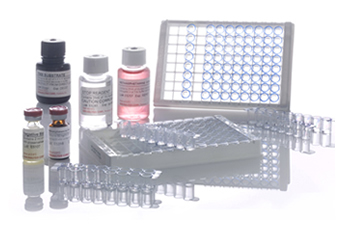
MATERIALS PROVIDED 96 Tests
1. Microwells coated with Zika NS1 Protein 12x8x1
2. IgM Sample Diluent: 1 bottle (ready to use) 22 ml
3. Calibrator: Yellow Cap. 1 Vial (ready to use) 1ml
4. Positive Control: Red Cap. 1 vial (ready to use) 1ml
5. Negative Control: Blue Cap. 1 vial (ready to use) 1ml
6. IgM Enzyme conjugate: 1 bottle (ready to use) 12ml
7. TMB Substrate: 1 bottle (ready to use) 12ml
8. Stop Solution: 1 bottle (ready to use) 12ml
9. Wash concentrate 20X: 1 bottle 25ml
 
MATERIALS NOT PROVIDED
1. Distilled or deionized water
2. Precision pipettes
3. Disposable pipette tips
4. ELISA reader capable of reading absorbance at 450nm
5. Absorbance paper or paper towel
6. Graph paper
 
STORAGE AND STABILITY
1. Store the kit at 2-8 C.
2. Keep microwells sealed in a dry bag with desiccants.
3. The reagents are stable until expiration of the kit.
4. Do not expose test reagents to heat, sun or strong light.

WARNINGS AND PRECAUTIONS
1. Potential biohazardous materials:
The calibrator and controls contain human source components, which have been tested and found non-reactive for hepatitis B surface antigen as well as HIV antibody with FDA licensed reagents. However, as there is no test method that can offer complete assurance that HIV, Hepatitis B virus or other infectious agents are absent, these reagents should be handled at the Biosafety Level 2, as recommended in the Centers for Disease Control/National Institutes of Health manual, "Biosafety in Microbiological and Biomedical Laboratories." 1984.
2. This kit is designed for research use only.
3. Optimal results will be obtained by strict adherence to the test protocol. Precise pipetting as well as following the exact time and temperature requirements is essential.
4. Do not pipette by mouth. Do not smoke, eat, or drink in the areas in which specimens or kit reagents are handled.
5. The components in this kit are intended for use as an integral unit. The components of different lots should not be mixed.
6. Control sera and sample diluent contain preserved with sodium azide. Sodium azide may react with lead and copper plumbing to form explosive metal azide. On disposal, flush with a large volume of water.
SPECIMEN COLLECTION AND HANDLING
1. Collect blood specimens and separate the serum.
2. Specimens may be refrigerated at 2–8 C for up to seven days or frozen for up to six months. Avoid repetitive freezing and thawing.
REAGENT PREPARATION
Prepare 1X Wash buffer by adding the contents of the bottle (25 ml, 20X) to 475 ml of distilled or deionized water. Store at room temperature (18-26 ℃).
 
ASSAY PROCEDURE
Bring all specimens and kit reagents to room temperature (18-26 C) and gently mix.
1. Place the desired number of coated strips into the holder.
2. Negative control, positive control, and calibrator are ready to use. Prepare 1:21 dilution of test samples, by adding 10 l of the sample to 200 l of sample diluent. Mix well.
3. Dispense 100 l of diluted sera, calibrator and controls into the appropriate wells. For the reagent blank, dispense 100l sample diluent in 1A well position. Tap the holder to remove air bubbles from the liquid and mix well. Incubate for 20 minutes at room temperature.
4. Remove liquid from all wells. Wash wells three times with 300 l of 1X wash buffer. Blot on absorbance paper or paper towel.
5. Dispense 100 l of enzyme conjugate to each well and incubate for 20 minutes at
 
room temperature.
6. Remove enzyme conjugate from all wells. Wash wells three times with 300 l of 1X wash buffer. Blot on absorbance paper or paper towel.
7. Dispense 100 l of TMB substrate and incubate for 10 minutes at room temperature.
8. Add 100 L of stop solution.
9. Read O.D. at 450 nm using ELISA reader within 15 min. A dual wavelength is recommended with reference filter of 600-650 nm.
 
CALCULATION OF RESULTS
1. Check Calibrator Factor (CF) value on the calibrator bottle. This value might vary from lot to lot. Make sure you check the value on every kit.
2. Calculate the cut-off value: Calibrator OD x Calibrator Factor (CF).
3. Calculate the Ab (Antibody) Index of each determination by dividing the O.D. value of each sample by cut-off value.
 
Example of typical results:
Calibrator mean OD = 0.8
Calibrator Factor (CF) = 0.5
Cut-off Value = 0.8 x 0.5= 0.400
Positive control O.D. = 1.2
Ab Index = 1.2 / 0.4 = 3
Patient sample O.D. = 1.6
Ab Index = 1.6 / 0.4 = 4.0
QUALITY CONTROL
The test run may be considered valid provided the following criteria are met:
1. The O.D. of the Calibrator should be greater than 0.250.
2. The Ab index for Negative control should be less than 0.9.
3. The Ab Index for Positive control should fall within the range
specified on the COA/label.
 
INTERPRETATION
The following is intended as a guide to interpretation of Zika virus IgM test results; each laboratory is encouraged to establish its own criteria for test interpretation based on sample populations encountered.
 
Antibody Index Interpretation
<1.0 No detectable antibody to Zika virus IgM by ELISA.
1.0-1.4 Borderline positive. Follow-up testing is recommended if clinically indicated.
>1.4 Detectable antibody to Zika virus IgM by ELISA.
 
LIMITATIONS OF THE TEST
1. To enhance sensitivity and specificity of this IgM test provided sample diluent has been formulated to block IgG and Rheumatoid Factor (RF) interferences. Turbidity could be seen after diluting serum with sample diluent. This turbidity is due to the blocking of serum IgG and has shown no interference with test results. It can be removed by centrifugation.
2. In specimens with high RF and high autoimmune antibodies, the possibility of eliminating the interferences cannot be ruled out entirely.
3. Lipemic or hemolyzed samples may cause erroneous results.
 

96T/Kits

1. Dick GW, Kitchen SF, Haddow AJ. Zika virus isolations and serological specifi city. Trans R Soc Trop Med Hyg. 1952;46:509–20.DOI: 10.1016/0035-9203(52)90042-4
2. Duffy MR, Chen TH, Hancock WT, Powers AM, Kool JL, Lanciotti RS, ZIKAV outbreak on Yap Island, Federated States of Micronesia. N Engl J Med.2009; 360:2536–43.
3. www.cdc.gov/eid • Vol. 14, No. 8, August 2008
4. Zika Virus: Questions and Answers. U.S. Centers for Disease Control and Prevention (CDC), 2016. (Accessed Feb. 23, 2016, at http://www.cdc.gov/zika/disease-qa.html.)
5. Martines RB, Bhatnagar J, Keating MK, et al. Notes from the Field: Evidence of Zika Virus Infection in Brain and Placental Tissues from Two Congenitally Infected Newborns and Two Fetal Losses - Brazil, 2015. MMWR Morb Mortal Wkly Rep 2016;65:159-60.
6. Oliveira Melo AS, Malinger G, Ximenes R, Szejnfeld PO, Alves Sampaio S, Bispo de Filippis AM. Zika virus intrauterine infection causes fetal brain abnormality and microcephaly: tip of the iceberg? Ultrasound Obstet Gynecol 2016;47:6-7.
7. Mlakar J, Korva M, Tul N, et al. Zika Virus Associated with Microcephaly. N Engl J Med 2016.
8. World Health Organization. IHR procedures concerning public health emergencies of international concern (PHEIC). 2016 [cited 2016 Feb 2].http://www.who.int/ihr/procedures/pheic/en/
9. Cha AE, Dennis B, Murphy B. Zika virus: WHO declares global public health emergency, says causal link to brain defects ‘strongly suspected.’ Washington Post. 2016 [cited 


Featured Products

· Zika Virus IgM ELISA Kit · Yellow Fever Virus IgM ELISA Kit · Yellow Fever Virus IgG ELISA Kit

Recently Viewed